
What these projects demonstrate.
Rogue Valley Now, Midland Odessa Now and Mazunte Now are owned, independent community-information projects. They make it possible to inspect how local information can be organized around places, events, activities and practical resources. They are not government-commissioned client projects.
This breakdown examines the information-design choices shown in the work. It does not report a controlled experiment, commissioned client outcome, measured revenue increase or verified improvement in resident-service performance.
Rogue Valley Now: organize discovery by place and activity.
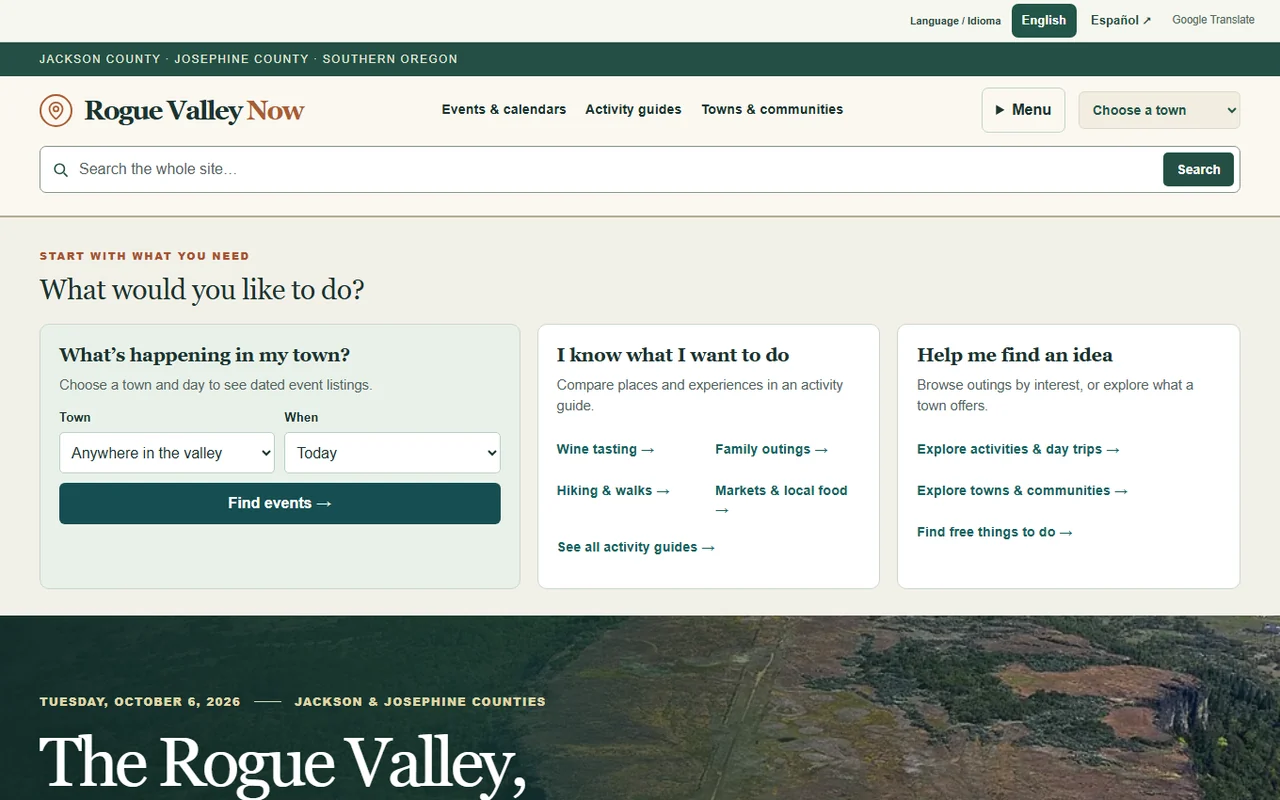
The Rogue Valley includes several communities with different local interests. The project’s town and event discovery paths let someone approach the information through a place or an activity. A resident looking for something to do has a different task from someone looking for a specific public resource.
Design lesson: give distinct tasks a recognizable entry point, then link related information in context. A regional homepage should help someone choose a direction; it should not repeat every detail from every town or event.
Inspect the live Rogue Valley Now website (opens in a new tab)

Mazunte Now: local context and language matter.
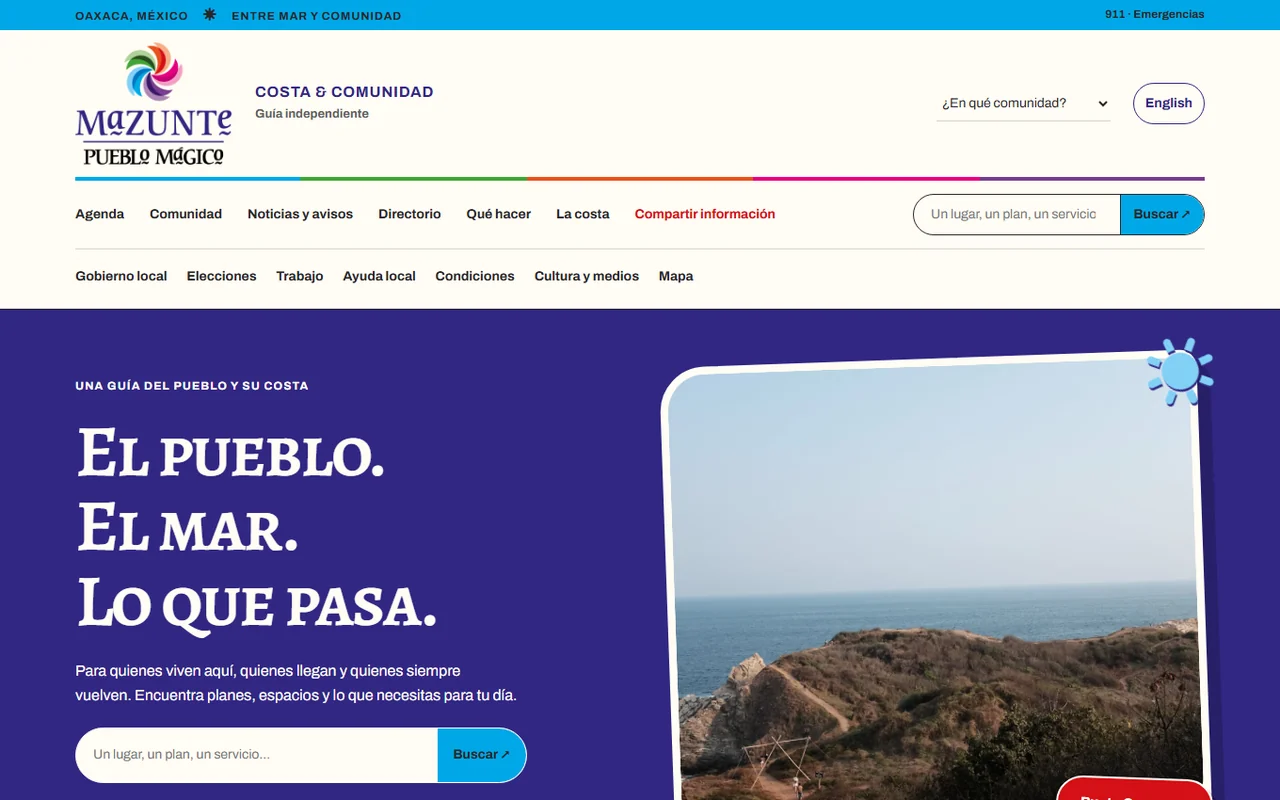
Mazunte Now brings Spanish and English community and visitor information together for Mazunte and nearby areas. Its visual identity and entry points reflect its own setting rather than copying the Rogue Valley presentation.
Design lesson: decide which audiences and languages the information needs to serve. Local terminology, useful destinations and a clear language path matter alongside the page layout. A translated page still needs its links, dates and practical instructions reviewed.
Inspect the live Mazunte Now website (opens in a new tab)
Midland Odessa Now: a second regional setting.
Midland Odessa Now (opens in a new tab) is an additional owned community-information project in West Texas. Compare it with the other sites to discuss which categories, place names and local resources a regional audience needs.
Design lesson: a reusable technical approach should leave room for different local priorities. A shared implementation pattern is useful when it supports distinct, verified information for each community.
How this translates to a public-agency project.
A community guide and an official agency service have different responsibilities. An agency project needs its own approved content, accessibility and records requirements, security review, system ownership and procurement scope. The independent projects demonstrate work to inspect; they do not substitute for those decisions.
Finding information
Use resident tasks to shape a public website, navigation and content structure.
Explore website designKeeping it current
Assign sources, owners and review steps to the information that changes.
Explore content supportFollowing through
Map what happens after someone submits a request, including handoffs and closure.
Explore workflow toolsFor the operational side, try the fictional Cedar Bay request walkthrough. It is a separate demonstration using sample data, not a live municipal system.
To plan a project, follow the redesign process guide and capture the requirements with the scope builder.